
Header-based traffic filtering for cloaking is what separates profitable Facebook campaigns from fragile setups that collapse the moment reviews spike. When you ignore request headers, you invite scanners, researchers, and low quality bots direto para as suas money pages, envenenando dados, inflando custo por aquisição e acelerando bans que destroem o mês.
Most cloakers still treat headers like a nice extra while detection teams use them as primary fingerprints to classify every click with precision. If you want stable scaling with aggressive angles, you need a stack that inspects headers at the edge, filters junk in microseconds, and feeds only clean buyers into your funnel every single day.
Why headers decide if your cloaker survives in 2025
Facebook, Google, and TikTok push a huge amount of context through HTTP headers and browser signals on each request. Device hints, protocol quirks, forwarding chains and internal browser patterns expose whether the visitor is a real prospect or a synthetic reviewer escondido atrás de uma infraestrutura própria.
Detection teams combine those headers with IP reputation and behavior to score each click before your page even loads. When your cloaker ignores this layer, reviewers atravessam direto para o offer e disparam manual checks, learning resets e throttling silencioso que drenam o orçamento enquanto você tenta adivinhar o que aconteceu com o criativo.
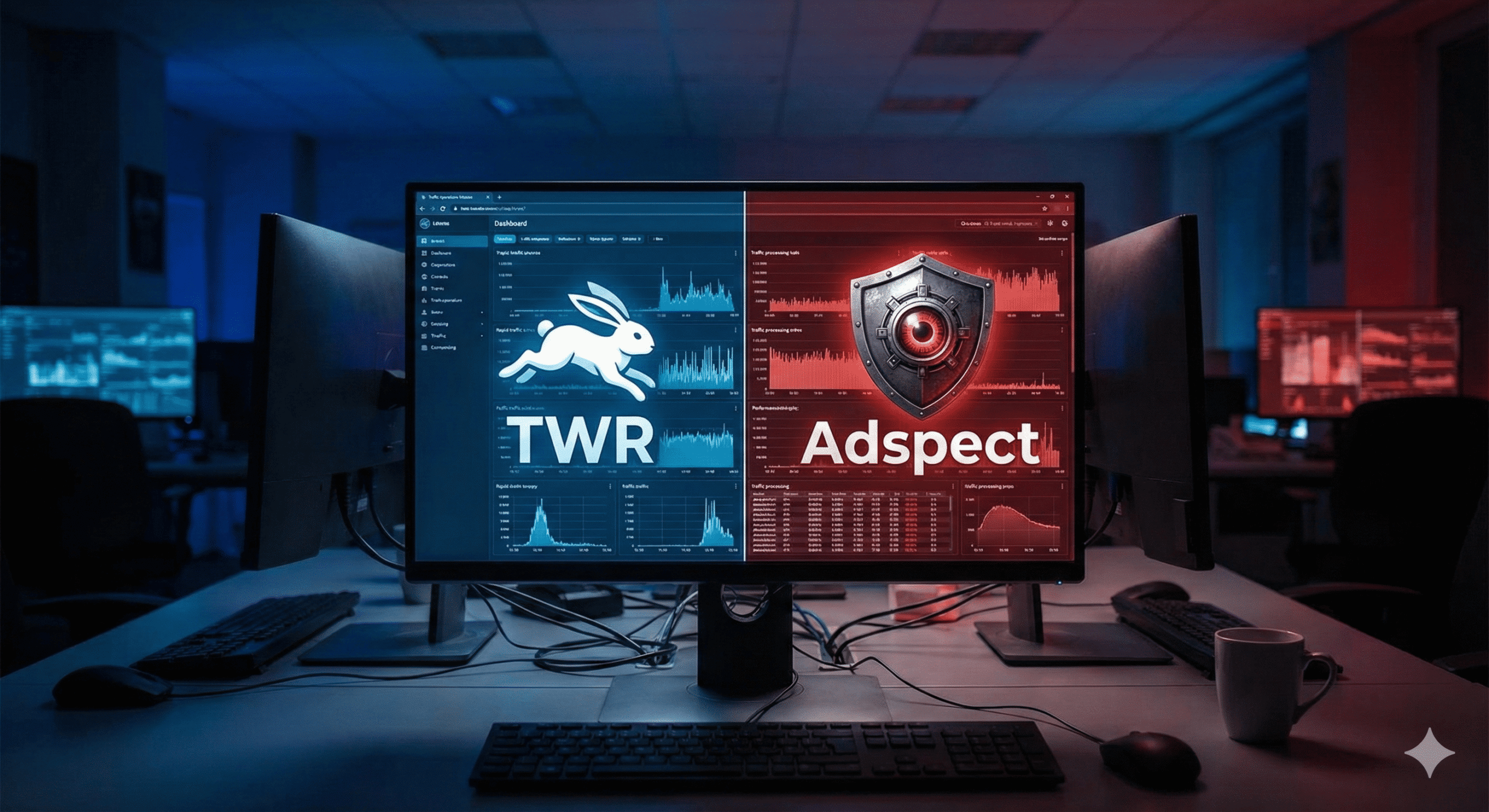
Where legacy cloakers like Adspect lose the header war
Adspect presents itself as a powerful traffic filtering and cloaking service, with cloud infrastructure, tracker integrations like Binom and support for major ad networks. In practice, it gives you flexible rules for user agents, referrers, IP ranges and fingerprints, so you can assemble your own defense layer campaign by campaign.
That flexibility looks attractive in a sales page, yet many media buyers discover the hidden tax: constant manual rule work. Every time detection teams change tactics, header anomalies slip through, hit your money pages and detonate bans before anyone updates the config. That lag costs real money in dead domains, disabled accounts and scale that never passes day three.
TWR takes the opposite approach. Instead of dropping a raw rule builder in your lap, it ships opinionated header-based filtering tuned for aggressive verticals and real scale. Our engine reads connection headers, forwarding chains and browser fingerprints together, then makes a single decision at the edge. The result is a bot wall that holds under spend instead of collapsing the moment traffic gets serious.
Header signals that separate bots from buyers
To understand why header-based filtering gives such an edge, focus on four patterns you see again and again in toxic traffic. They repeat across networks, tools and fake browsers:
- Mismatched forwarding headers that expose internal tooling instead of normal proxy chains.
- Generic user agents grudados em combinações de protocolo totalmente fora do padrão.
- Empty or synthetic referrers em flows que deveriam vir sempre de cliques de anúncio reais.
- Inconsistent language and encoding headers que não batem com geo, creative ou copy.
Legacy setups expect you to model everything à mão em listas estáticas e regex gigantes, que quebram assim que o outro lado gira a estratégia. A modern cloaker like TWR internalizes these patterns as evolving models, so filters keep learning while you raise budgets, launch new creatives and expand geos sem reinventar toda a proteção a cada teste.
Protecting Facebook ads without killing performance
Header-based filtering only works if it stays invisible to buyers o tempo todo. The goal is simple: reviewers never touch money pages and real users never feel friction or weird redirects. That balance depends on low latency, accurate header decisions and intelligent fallbacks when signals look noisy or conflicting.
TWR processes headers at the edge and routes suspicious traffic straight into polished white pages that mirror the ad promise without exposing your real offer. Clean visitors go direto para quiz, VSL ou checkout sem passos extras, so you keep fast load times, honest conversion data and a funnel that stays profitable even while detection pressure keeps climbing.
Metrics that prove your header filters are actually working
You know header-based traffic filtering for cloaking is doing the heavy lifting when three metrics move together em todos os conjuntos de anúncios. First, pass-through rate stays consistently above ninety nine percent while you open budgets and launch fresh audiences. That means reviewers and bots are being blocked before touching real funnels.
Second, conversion rate sobe porque sessões inúteis param de diluir seus números e roubar budget dos públicos quentes. Third, ban velocity despenca: domains duram mais, revisões de conta diminuem e suas janelas de escala passam de dias para semanas. When that happens, you stop rebuilding stacks and start compounding results with planned media instead of emergency fixes.
Talk to our specialists at TWR and turn headers into a weapon
We built TWR for teams that run aggressive offers and recusam doar margem para review bots e cloakers frágeis. Our specialists map your funnel end to end, plug in header-aware filtering, and align cloaking rules with your targeting so Facebook sees clean white pages while real buyers land exactly where they convert.Bring us your vertical, budgets and KPIs. We will deploy a header-based filtering stack that protects money pages, preserves learning and keeps your best campaigns invisible to scanners. If you want to stop leaking traffic into outdated tools and scale like a serious player, talk to our team at TWR and let us turn your headers into a competitive weapon in every single campaign.